
Eight air purifiers currently sell under RM1,000 in Malaysia, from RM369 for the Xiaomi Smart Air Purifier 4 Compact to RM959 for the Sharp FP-J40LW. The best-value pick is the Xiaomi Smart Air Purifier 4 Lite at RM549, because it’s the only unit in this bracket that publishes a real CADR figure you can check the room-size claim against.
Everything here beats a rental plan on cost. Divide RM1,000 by any Malaysian rental’s monthly fee and you get the RM1,000 Clock: the month at which renting has cost more than buying this list outright. For CUCKOO’s R Model at RM77 a month it lands at month 13. For Coway’s Storm 2 at RM70 a month, month 14. Nothing on rental crosses year two without passing RM1,000.
Ordered by price, low to high. Ranking criteria are below.
Walk into a TBM in Bangsar and the air purifier shelf runs from RM369 to RM4,000, and the salesman will steer you toward the RM3,000 end within ninety seconds. He isn’t wrong that it’s a better machine. He’s wrong that you need it. Most Malaysians are buying a purifier for one bedroom, and one bedroom is exactly the room where the cheap units stop being a compromise.
What do CADR, HEPA grade and coverage actually mean?
Quick Answer: CADR (Clean Air Delivery Rate) is how much clean air the unit produces per hour, in m³/h or CFM. It’s the only number that lets you compare across brands. HEPA grade (H11 to H14) describes what the filter catches, where H13 captures 99.95% of 0.3 micron particles. Coverage in m² or sq ft is a marketing figure derived from CADR at an assumed rate of air turnover, and brands choose that assumption themselves.
Three things worth internalising before you read the list:
- CADR is comparable. Coverage is not. Two units claiming 30 m² can differ by half in actual airflow, because there’s no rule forcing brands to assume the same air changes per hour.
- HEPA grade matters less than you think in this bracket. Every unit here uses H11 or better, which is more than enough for dust, pollen, pet dander and haze particulates. Airflow is the constraint, not filter grade.
- Ion technology is not filtration. Plasmacluster, nanoe and generic “plasma ioniser” are separate systems bolted onto the filter. More on why that matters below.
Key takeaway: If a listing gives you coverage in m² but no CADR, you cannot verify the claim. In the sub-RM1,000 bracket, that describes most of the market.
How we ranked this list
Four criteria, in the order we weighted them:
- Verified RM price under RM1,000 as of 6 August 2026. Retrieved from the brand’s own Malaysian store or a named retailer, not a marketplace listing that changes hourly.
- Published specifications you can check. Units that publish CADR rank above units that publish only coverage.
- Suitability for a Malaysian bedroom specifically, which is the room almost everyone in this budget is actually buying for.
- Filter availability in Malaysia. A cheap purifier with filters you can only source from overseas sellers is not cheap.
What would disqualify an entry: no verifiable RM price from a named Malaysian seller, or an ion-only device sold as an air purifier with no filtration stage. Both are common under RM1,000 and both are excluded.
Disclosure: Cravings In Malaysia publishes this list independently. We were not paid or supplied units by any brand here. Prices came from TBM Online, the Panasonic Malaysia store and Aihome Malaysia on 6 August 2026, and they will move. Two of the eight were on visible promotional discount when we checked, which we’ve noted per entry.
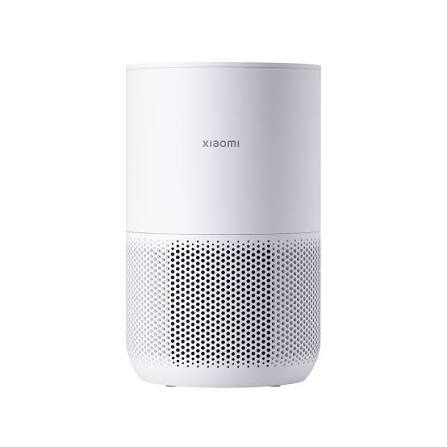
1. Xiaomi Smart Air Purifier 4 Compact (RM369)
Specifications: CADR 230 m³/h (about 135 CFM), coverage 16 to 27 m², 27W maximum draw, HEPA plus activated carbon, PM sensor with four-colour indicator, Mi Home app control, TÜV Rheinland Allergy Care certified.
The cheapest unit here that publishes a CADR figure, which is why it opens the list rather than sitting at the bottom of it. At 135 CFM it clears the airflow benchmark for a room up to roughly 200 sq ft, which covers the overwhelming majority of Malaysian bedrooms with room to spare.
Discounted from RM499 when we checked. Even at full price it would hold this position.
Who it suits: a single bedroom, a home office, or a rented room. The obvious first purifier.
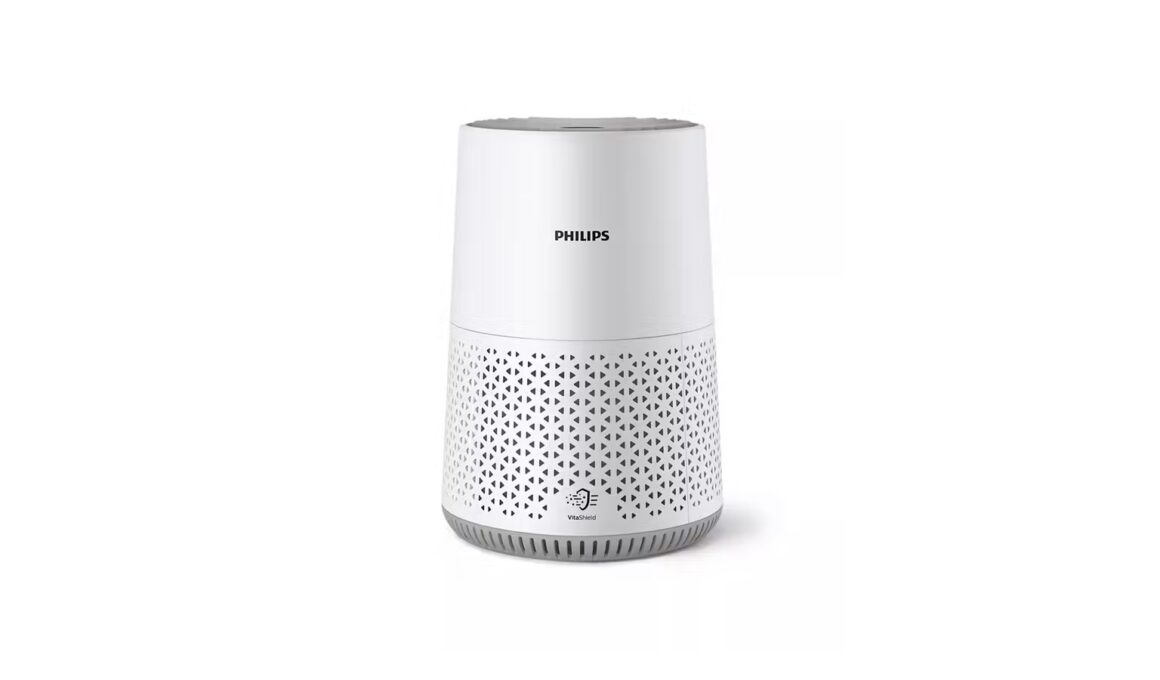
2. Philips 600i AC0650/10 (RM419)
Specifications: NanoProtect HEPA plus active carbon, three automatic modes, filter replacement lockout, RRP RM659.
Philips at RM419 is the value story of the whole category, and TBM was showing it at nearly 40% off list. The build quality gap between this and a RM1,500 Philips is smaller than the price gap suggests, because the extra money in the range mostly buys airflow and app control rather than better filtration.
The lockout deserves a word. When the filter expires, the unit stops. That’s inconvenient by design, and it’s the reason Philips owners rarely run a dead filter for months without noticing.
Who it suits: buyers who want a mainstream brand with a service network and don’t need app control.
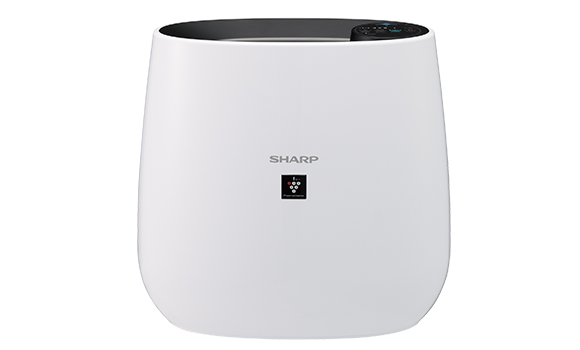
3. Sharp FP-J30LB (RM449)
Specifications: 23 m² coverage, Plasmacluster ion technology, HEPA plus deodorising filter, haze mode, RRP RM637.
The bedroom Sharp, and the one most Malaysian households already have a version of. Haze mode is a genuine Malaysia-specific feature rather than a translated one, and it does what it says: ramps the fan and holds it there rather than trusting the auto sensor during a smoke event.
Sharp doesn’t publish CADR for this model on its Malaysian pages, so the 23 m² figure has to be taken on trust. Given the physical size of the unit, treat it as a bedroom purifier and not a living room one.
Who it suits: anyone who wants a physical service counter rather than a hotline, and anyone buying specifically with haze season in mind.
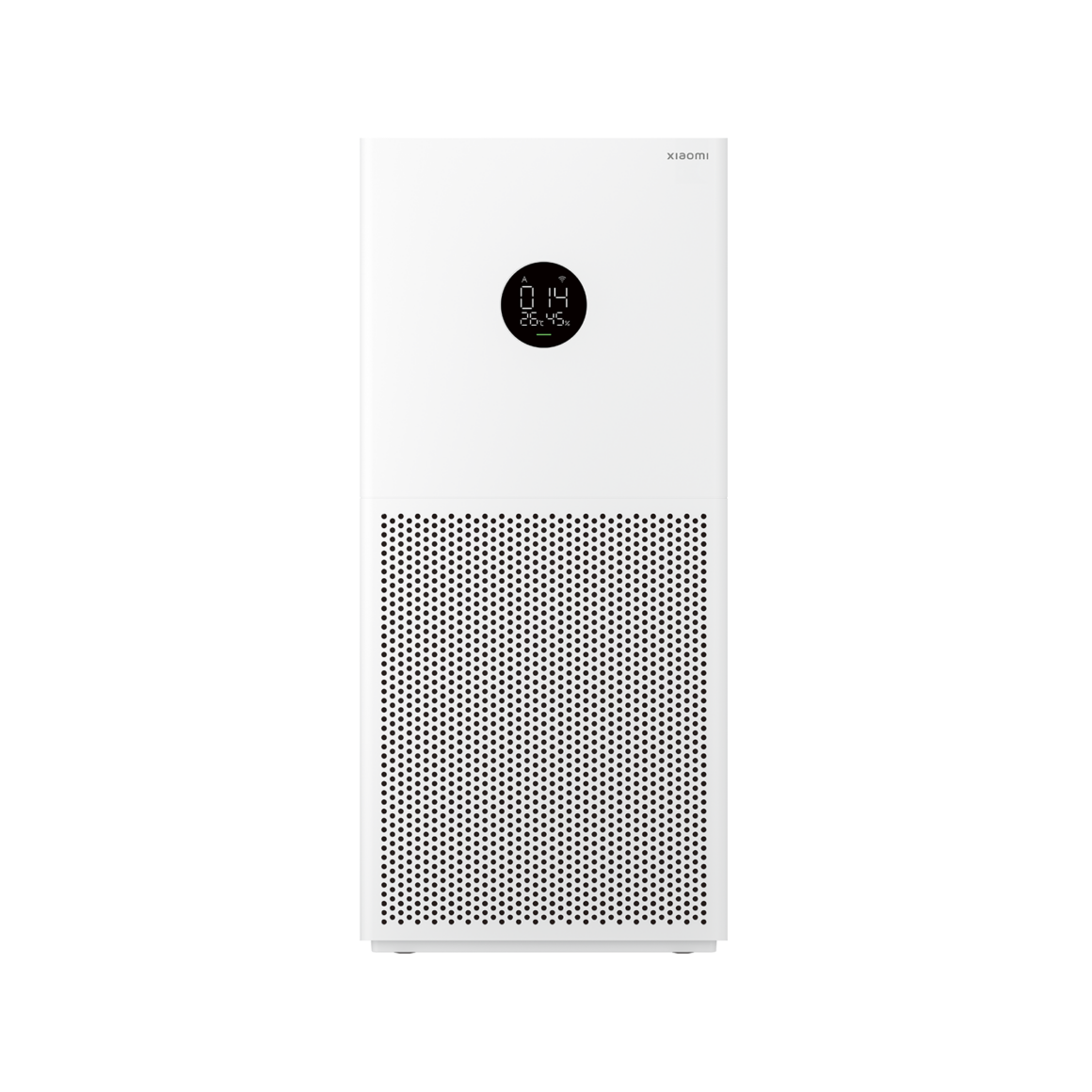
4. Xiaomi Smart Air Purifier 4 Lite (RM549)
Specifications: CADR 360 m³/h (about 212 CFM), coverage 25 to 43 m², 33W maximum draw, 33.4 dB minimum noise, three-in-one filter rated 6 to 12 months, TÜV Rheinland Allergy Care certified.
Our pick of the bracket. At 212 CFM it delivers more airflow than anything else here, it costs RM549, and it’s the one unit whose room-size claim you can independently verify. That combination doesn’t exist anywhere else under RM1,000.
The 33W draw is worth noting for a machine you’ll run overnight. At Malaysian domestic tariffs, running it continuously costs a rounding error compared with the aircon in the same room.
Discounted from RM699 when we checked.
Who it suits: master bedrooms, small living rooms, and anyone who wants to check the arithmetic rather than trust the box.
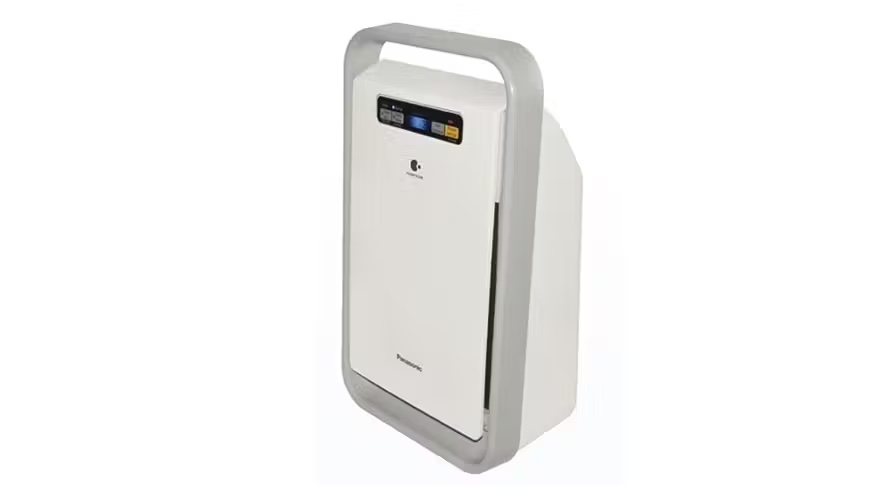
5. Panasonic F-PXJ30AHM (RM669)
Specifications: 20 m² (215 sq ft) coverage, nanoe technology, HEPA filter, 3D circulation airflow with side and front modes, rounded casing.
Panasonic’s entry unit, and the only one on this list priced directly by the manufacturer’s own Malaysian store rather than a retailer. The rounded design is aimed at children’s rooms, and the dual airflow modes address something real: pollutants stratify by height, and the low setting targets the 30 cm above floor level where crawling children and pets actually breathe.
Careful here. Panasonic’s Malaysian store also lists the F-GPT01A portable nanoe generator at exactly the same RM669. That device has no HEPA filter. Same brand, same price, completely different product. Check the model number.
Who it suits: nurseries and children’s rooms, and buyers who want manufacturer-direct purchase with 0% instalment options.
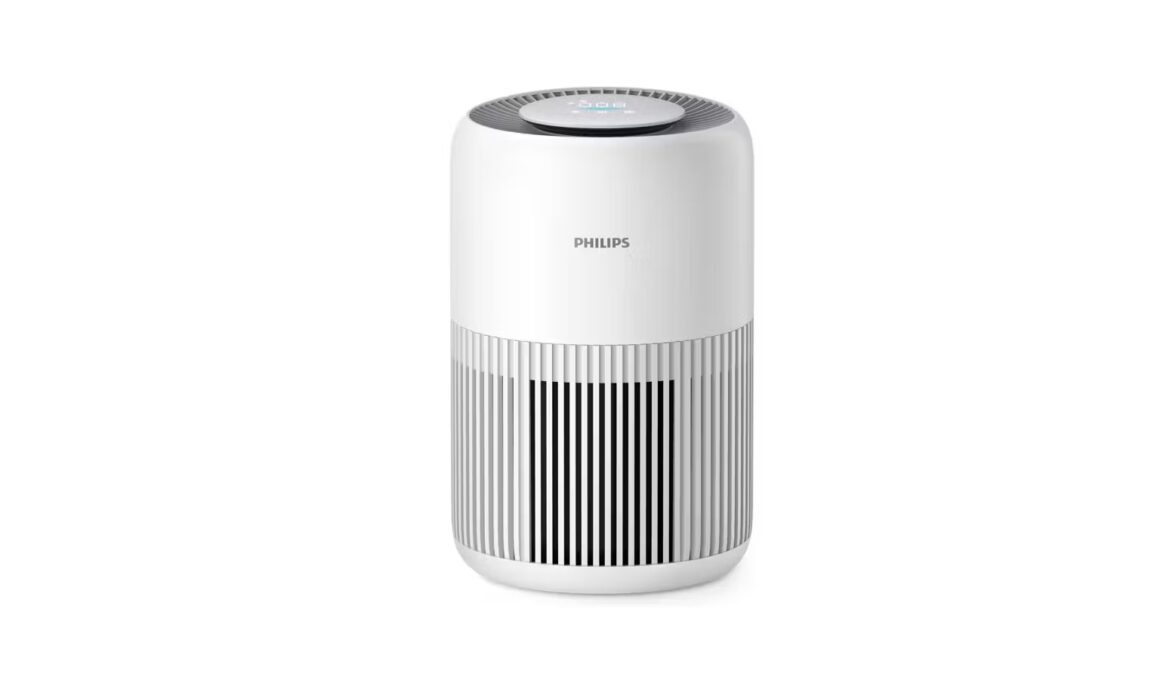
6. Philips PureProtect Mini 900 AC0950/10 (RM769)
Specifications: NanoProtect HEPA, compact footprint, automatic mode, RRP RM899.
The Mini 900 is the awkward one on this list. It’s a good machine, but at RM769 it sits above the Xiaomi 4 Lite while delivering less airflow, and the premium buys you the Philips name and filter availability rather than performance.
That said, filter availability is not nothing. Philips filters are stocked at Malaysian retail and through consumer care. Xiaomi filters mostly come through marketplaces.
Who it suits: buyers who want small physical size and are willing to pay for the easier filter supply chain.
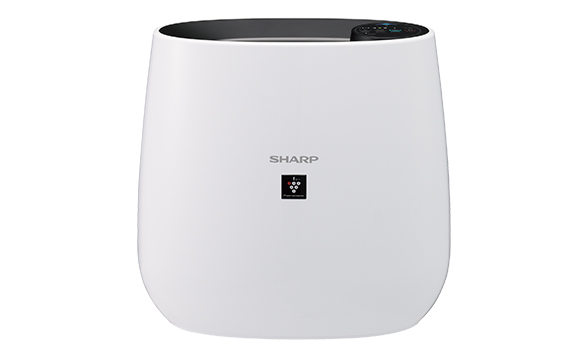
7. Sharp FP-JM30LB (RM799)
Specifications: 21 m² coverage, mosquito catcher, Plasmacluster, HEPA plus deodorising filter, RRP RM971.
Yes, the one with the mosquito trap. It uses a UV light and adhesive sheet to catch mosquitoes while the purifier runs. Easy to mock, and genuinely useful in a ground-floor terrace house during dengue season in a way that no imported design brief would ever have anticipated.
The trade is that you’re paying RM350 more than the FP-J30LB for slightly less coverage plus the trap. Buy it for the trap or don’t buy it.
Who it suits: ground-floor homes, houses with gardens, and anyone in a dengue hotspot.
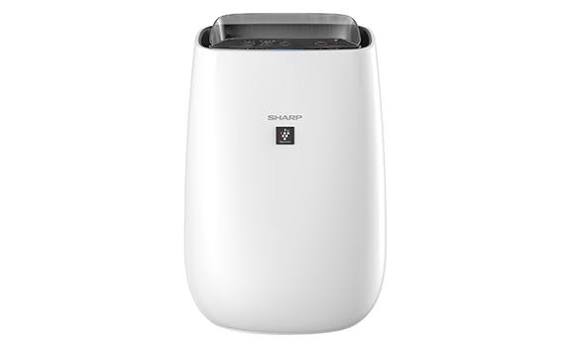
8. Sharp FP-J40LW (RM959)
Specifications: 30 m² coverage, Plasmacluster 7,000 ion density, HEPA plus deodorising filter, haze mode, RRP RM1,109.
The largest room this list covers, and the unit to buy if you’re purifying a living room rather than a bedroom. It scrapes under RM1,000 at TBM’s current price and reverts above it at RRP, so this one is genuinely promotion-dependent.
Who it suits: open living areas up to about 320 sq ft, or households wanting one unit to cover a shared space.
What does the sub-RM1,000 bracket actually buy you?
Quick Answer: Between RM369 and RM959, you get true HEPA filtration, a particulate sensor on most models, and enough airflow for any normal Malaysian bedroom. What you don’t get is airflow for an open-plan living area, published CADR from most brands, or any included servicing. Every unit here is a buy-outright product with filters you replace yourself.
| Model | Price (RM) | RRP (RM) | Published CADR | Rated coverage |
|---|---|---|---|---|
| Xiaomi Smart Air Purifier 4 Compact | 369 | 499 | 230 m³/h (135 CFM) | 16 to 27 m² |
| Philips 600i (AC0650/10) | 419 | 659 | Not published (MY) | Small rooms |
| Sharp FP-J30LB | 449 | 637 | Not published (MY) | 23 m² |
| Xiaomi Smart Air Purifier 4 Lite | 549 | 699 | 360 m³/h (212 CFM) | 25 to 43 m² |
| Panasonic F-PXJ30AHM | 669 | 669 | Not published (MY) | 20 m² |
| Philips PureProtect Mini 900 (AC0950/10) | 769 | 899 | Not published (MY) | Small rooms |
| Sharp FP-JM30LB | 799 | 971 | Not published (MY) | 21 m² |
| Sharp FP-J40LW | 959 | 1,109 | Not published (MY) | 30 m² |
What this table shows: every air purifier we could verify under RM1,000 in Malaysia, with whether the brand publishes a checkable airflow figure.
Source: Prices retrieved 6 August 2026 from TBM Online (shop.tbm.com.my) for Philips and Sharp models, the Panasonic Malaysia online store (store.apac.panasonic.com/my) for the F-PXJ30AHM, and Aihome Malaysia (aihome.com.my) for both Xiaomi models. CADR figures from Xiaomi Malaysia product specifications. “Not published (MY)” means the figure does not appear on the brand’s Malaysian product page or the retailer listing; some of these models do publish CADR in other markets. CFM conversions calculated at 1 m³/h = 0.5886 CFM.
Key takeaway: Six of the eight brands here won’t tell you the one number that would let you compare them. That is the actual state of the Malaysian budget market, and it’s why we weighted published specifications so heavily.
Is it cheaper to rent an air purifier or buy one under RM1,000?
Quick Answer: Buying is cheaper, and the crossover comes fast. Divide RM1,000 by the monthly rental fee to get the RM1,000 Clock: the month at which a rental plan has cost more than buying the most expensive unit on this list outright. Across current Malaysian plans it runs from month 7 to month 17. No rental plan in the market reaches its second birthday still costing less than RM1,000.
| Rental plan | Monthly (RM) | RM1,000 Clock | 5-year total (RM) |
|---|---|---|---|
| Coway Storm 2, promotional rate | 58 | Month 17 | 3,480 |
| Coway Storm 2, standard rate | 70 | Month 14 | 4,200 |
| CUCKOO R Model | 77 | Month 13 | 4,620 |
| Coway Lombok 3 | 90 | Month 11 | 5,400 |
| CUCKOO U Model | 143 | Month 7 | 8,580 |
What this table shows: how quickly a rental plan’s cumulative cost passes RM1,000, and where it ends up over a full contract.
Source: Rental rates retrieved 6 August 2026 from CUCKOO Malaysia (cuckoo.com.my) and Coway authorised dealer pages (coway-official-malaysia.com, mycoway-official.com). Five-year totals assume 60 months at the stated rate with no rate change; some CUCKOO plans price years 4 and 5 lower. The promotional Coway rate is campaign-dependent and was live on one dealer page at the time of retrieval.
The honest counter-argument, because there is one. Rental includes servicing every two to four months, filter replacement, and a five-year warranty. Nothing on this list includes any of that. The RM1,000 Clock tells you when you’ve spent more, not when you’ve bought less. If you want a technician to handle the machine for five years, rental is a maintenance contract and the comparison isn’t really about the hardware.
But for one bedroom, changing a filter once a year is a ten-minute job.
Key takeaway: If you’re buying for a bedroom and you’re willing to change a filter yourself, buy outright. Renting only makes sense when servicing is the thing you’re actually purchasing. Our full comparison of CUCKOO, Coway, Philips and Sharp works through when that flips.
How big a room can a purifier under RM1,000 actually handle?
Quick Answer: About 200 to 320 sq ft for the units here that publish airflow, which is a bedroom, not a living room. The Association of Home Appliance Manufacturers benchmark is that smoke CADR in CFM should be at least two-thirds of the room’s floor area in square feet, producing roughly 4 to 5 air changes per hour. Run that against a typical 12ft by 12ft Malaysian bedroom, 144 sq ft, and you need about 96 CFM. Every unit here that publishes CADR clears it.
Here’s where it gets interesting, and where Xiaomi comes out looking unusually honest.
Xiaomi rates the 4 Compact for 16 to 27 m². At 135 CFM, the AHAM benchmark puts it at 202 sq ft, or 18.8 m². The 4 Lite is rated 25 to 43 m², and at 212 CFM the benchmark puts it at 316 sq ft, or 29.4 m². In both cases the honest allergy-grade figure sits near the bottom of the published range rather than outside it.
That’s not an accident. Publishing a range rather than a single number is what a brand does when it’s describing both “this still does something useful” and “this cleans the air properly” in the same line. Most brands publish only the first figure and call it coverage.
So the working rule for this bracket: where a range is published, believe the low end. Where only a single coverage number is published, halve it.
Key takeaway: Multiply your room’s square footage by 0.67 to get your minimum CADR in CFM. Two purifiers in two closed bedrooms will always beat one purifier in the hallway, because air doesn’t travel through shut doors.
Why do cheap air purifiers advertise ions instead of filters?
Quick Answer: Because ion generators are cheap to add and easy to market. Plasmacluster, nanoe and generic plasma ionisers work by releasing charged particles that cause airborne contaminants to clump and settle, or that oxidise contaminants on surfaces. That’s a real effect, but it’s a slow one, and settling particles onto your floor is not the same as removing them from the room. The HEPA filter is what actually cleans your air.
Sharp’s own documentation puts Plasmacluster’s mould suppression in the range of days and virus suppression in hours, not minutes. Compare that with a filter pass, which happens continuously every time air moves through the machine.
This matters commercially because ion branding costs a manufacturer very little and lets a RM400 unit carry a technology name. It becomes actively dangerous to your wallet at the point where a device is sold with ions and no filter at all, which is exactly what the Panasonic F-GPT01A is at RM669: a nanoe generator, no HEPA stage, sitting on the same store page at the same price as a genuine filter purifier.
Key takeaway: Read the filter specification, not the technology badge. If a listing describes ion output but never names a HEPA filter, it isn’t an air purifier in the sense you mean.
Not sure which one fits your room?
Our full ranking of the best air purifiers in Malaysia for 2026 covers every price bracket with noise ratings and wattage. Drop your room dimensions in the comments and we’ll run the CADR arithmetic for you. Free, no sales pitch, and we’ll tell you if the honest answer is that you don’t need one.
When you shouldn’t buy a purifier under RM1,000
Four situations where this entire list is the wrong answer.
Your open-plan living area is over 40 m². Nothing here has the airflow. Either buy two units and place them in the rooms people actually sit in, or move up a price bracket.
Your problem is damp or mould smell. You need a dehumidifier. A purifier catches spores already in the air and does nothing about the moisture producing them.
You keep windows open. Every CADR figure on this page assumes a closed room. An open window resets the room continuously and your purifier becomes a fan with a filter in it.
You’ve been quoted a “smart purifier” under RM200 on a marketplace. At that price the fan cannot move enough air to matter, and the replacement filters usually cost a third of the unit price. The floor for a purifier that does something measurable in a real bedroom is around RM350.
Worth reading alongside this: our guide to whether you need an air purifier or an air conditioner covers the overlap most Malaysian buyers get wrong. And the same rent-versus-buy arithmetic runs through our treadmill buying guide, where CUCKOO’s RM102 monthly plan raises identical questions.
Frequently asked questions
What is the best air purifier under RM1,000 in Malaysia? The Xiaomi Smart Air Purifier 4 Lite at RM549 is our pick. It delivers 360 m³/h CADR, roughly 212 CFM, which is the highest airflow in this bracket, and it’s one of only two units under RM1,000 that publishes a CADR figure you can verify the coverage claim against. The Philips 600i at RM419 is the better choice if you want a mainstream service network.
How much should I spend on an air purifier in Malaysia? For one bedroom, RM370 to RM600 buys everything you need. For a living room up to 30 m², budget RM950 to RM1,600. Below RM350 the fan generally cannot move enough air to matter in a real room. Above RM1,600 you’re paying for coverage area, app features and quieter operation rather than better filtration.
Is it cheaper to rent or buy an air purifier in Malaysia? Buying is cheaper on cost. Use the RM1,000 Clock: divide RM1,000 by the monthly rental fee to find when renting has cost more than buying outright. At CUCKOO’s RM77 a month that’s month 13; at Coway’s RM70 a month, month 14. Rental includes servicing and a five-year warranty, so it’s a maintenance contract rather than a cheaper machine.
How often do I need to replace the filter on a budget air purifier? Xiaomi rates its three-in-one filter at 6 to 12 months, and most brands in this bracket quote 6 to 12 months for combined filters. In Malaysian humidity, treat the quoted life as a ceiling. The activated carbon layer saturates faster in high humidity than in the temperate markets where these ratings are set, so replace when odours return rather than waiting for the indicator.
Do I still need an air purifier if I have an air conditioner? Yes, for particulates. An air conditioner’s filter is a coarse mesh designed to protect the coil, not to capture PM2.5, pollen or haze particles. Aircon cools and dehumidifies; a purifier removes airborne particulate. They solve different problems, and in Malaysia most bedrooms need both running in the same closed room.
Are Xiaomi air purifiers good enough for Malaysian homes? For bedrooms, yes. Both models here carry TÜV Rheinland Allergy Care certification and publish CADR figures, which most competitors in this price bracket do not. The main trade-off is filter sourcing: Xiaomi replacement filters mostly come through online marketplaces rather than physical Malaysian retail, unlike Philips and Sharp.


