
Bank Negara has held the overnight policy rate at 2.75% at every meeting so far in 2026, and basic savings accounts at several major banks still pay 0.25% a year. Inflation ran at 1.9% in June 2026, so money parked in those accounts slowly loses buying power. It is worth looking at other ways to make idle cash, space, or time earn something.
This guide covers 7 passive income ideas for Malaysians, including unit trusts, REITs, and renting out a spare room or a car you barely drive. Each one comes with the rules, risks, and numbers as of October 2026.
What Passive Income Means in Malaysia
Passive income is money that keeps arriving after the setup work is done, with little day-to-day effort. Every idea below needs something upfront, whether that is capital, an asset you already own, or a few weekends of building.
After that, the weekly workload is small. The list starts with familiar investments and moves toward assets that earn rent, with 1 option that rewards effort early on.
1. ASNB Unit Trusts Like ASM and ASB
ASNB’s fixed-price funds are among the most familiar passive income options in Malaysia. The unit price is held at RM1.00 and the funds pay an annual income distribution. ASB paid 5.75 sen per unit for FY2025, while ASM declared 5.00 sen per unit for the year ending 31 March 2026.
ASNB compared that ASM payout with Maybank’s 12-month fixed deposit rate of 2.18%, a gap of 2.82 percentage points.
Eligibility depends on the fund. ASB, ASB 2, and ASB 3 Didik are for Bumiputera investors, while ASM, ASM 2 Wawasan, and ASM 3 are open to all Malaysian citizens. Non-Bumiputera units in the ASM funds run on a quota that is often full, so check live availability on the myASNB app first.
Payouts change from year to year and are never guaranteed, so treat the latest rate as a snapshot.
2. Dividend Stocks on Bursa Malaysia
Dividend stocks pay out a share of company profits, usually once or twice a year, and they suit people willing to research before buying. You need a trading account and a CDS account with a licensed broker, and you must be at least 18. Bursa shares trade in board lots of 100, so a stock priced at RM2 costs RM200 for the smallest purchase, before fees.
Dividends go to whoever owns the shares before the ex-dividend date. If a company pays 6 sen per share, a 100-share holding receives RM6 for that payout.
Yields look attractive on paper, but a share price can fall by more than the dividend pays. Companies can also cut payouts when profits drop. Investors who want Shariah-compliant stocks can filter using the Securities Commission’s classifications.
3. REITs for Property Income Without Buying Property
REITs let you earn a share of rent from malls, offices, and other properties by buying units on Bursa. They distribute most of their income to unitholders. The Bursa Malaysia REIT Index offered an average yield of about 5.36% in March 2026, against 3.56% on 10-year government bonds, according to Bloomberg data reported by The Edge.
The tax treatment changed this year. The 10% withholding tax concession ended for most individual investors from 2026, so resident individuals now declare REIT distributions in their annual return and pay at their own income tax rates, which go up to 30%. That lowers the take-home yield, especially for higher earners.
The Malaysian REIT Managers Association has been lobbying to bring the concession back, so check the latest rules before you buy. Prices also move with the market, and RHB Research noted in September that the REIT index had lagged the broader market so far in 2026.
4. Renting Out a Car You Barely Drive
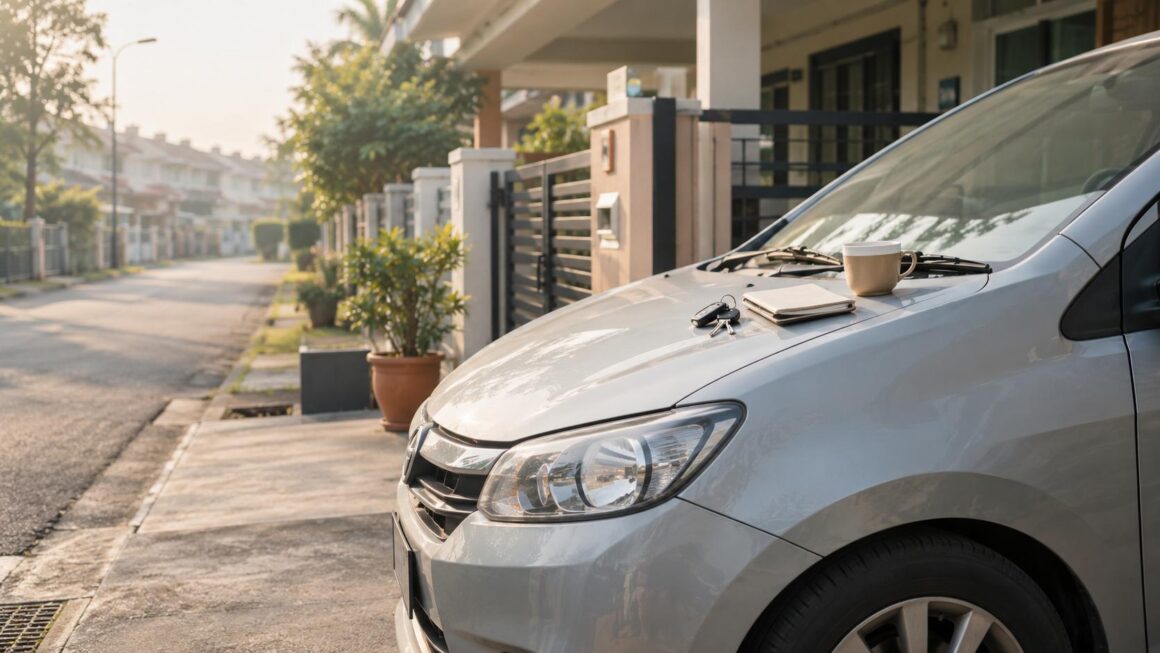
A car that sits in the porch most weekdays still costs money through loan instalments, road tax, and insurance. Renting it out can offset some of those costs.
Car-sharing platforms and rental marketplaces connect owners with renters, and some pass confirmed bookings to owners whose cars match. Platforms set conditions on the car, such as a good maintenance record and an age limit, which is under 6 years old on some. Earnings depend on your model, location, and the dates renters want, so there is no fixed monthly figure.
Before you list, check how the platform screens renters, what its insurance covers, and who pays if the car breaks down. Handover is also part of the job, since the car has to be passed to each renter and returned.
One option in Malaysia is Driveo, where owners can rent their car out and make money after registering as a host, and anyone with more than one car can use its fleet management software and app to keep bookings and renewals in one place.
5. Rent Out a Spare Room or Property
Renting out a room or unit remains the most familiar way to earn rental income. Gross residential yields averaged about 5.3% nationally in early 2026, according to Global Property Guide data based on PropertyGuru listings. Kuala Lumpur averaged about 4.9%, Johor Bahru about 5.3%, and George Town about 3.7%.
Private rooms with shared facilities in the Klang Valley rent for RM300 to RM1,200 a month, according to SPEEDHOME’s 2026 rental guide. Those are gross figures, and vacancy, repairs, and fees reduce what you keep.
Malaysia has no Residential Tenancy Act in force as of 2026, so the tenancy agreement does the heavy lifting. Stamp it within 30 days through e-Duti Setem on MyTax. The duty is roughly RM1 per RM250 of annual rent for a 1-year tenancy, with a RM10 minimum, which works out to about RM72 on a RM1,500 monthly rent. Rental income is taxable and goes in your annual return.
Short-stay rentals need extra care. There is no national ban, but a 2020 Federal Court ruling confirmed that a strata management corporation can prohibit short-term letting through its by-laws, so read your building’s rules before listing.
6. Fixed Deposits and Digital Bank Savings
Fixed deposits are the lowest-risk idea on this list, and the returns reflect that. Six-month fixed deposit board rates were mostly between 2.05% and 2.40% a year in comparisons earlier in 2026. On RM10,000, a year at 2.4% earns RM240, against about RM25 in a basic account paying 0.25%.
Rates follow Bank Negara’s policy rate, and its final policy meeting of 2026 is scheduled for 5 November. Check current board rates before you commit.
Digital banks add another option. Malaysia has 5 licensed digital banks: GXBank, Boost Bank, AEON Bank, Ryt Bank, and KAF Digital Bank. PIDM protects deposits at each of them up to RM250,000 per depositor, the same as traditional banks, while e-wallets carry no such protection. Promotional rates are often time-limited, so compare them before moving money.
7. Digital Products and Affiliate Content
This is the 1 idea that rewards effort before it rewards patience. Ebooks, budget templates, printable planners, online courses, and niche blogs or channels all take weeks to build. After that, they can sell or earn commissions repeatedly with little extra production work.
Most first products earn little, so treat this as a side project that may take months to pay off.
Income from affiliate links and digital sales is taxable in Malaysia. LHDN’s January 2026 guidelines for influencers say all income from digital activity must be declared, including free products received for reviews. Marketplaces such as Shopee and Lazada can share seller information with LHDN, and LHDN does not draw the line between hobby and business at a fixed ringgit amount, so keep records from the first sale.
Passive Income Ideas Compared at a Glance
The table below puts the 7 options side by side.
| Idea | What You Need | Effort After Setup | Main Risk |
|---|---|---|---|
| ASNB unit trusts | A MyKad and a fund you are eligible for | Low | Payouts vary yearly, and non-Bumiputera ASM quotas often fill |
| Dividend stocks | Trading and CDS accounts, plus cash for board lots of 100 | Medium | Share prices and dividends can fall |
| REITs | Trading and CDS accounts | Low to medium | Prices move, and distributions are taxed at your income tax rate |
| Idle car rental | A car under 6 years old, well maintained | Low to medium | Handover duties, and bookings that depend on model, dates, and location |
| Spare room or property | A property and a stamped tenancy agreement | Medium | Vacancy, repairs, and strata rules on short stays |
| Fixed deposits and digital bank savings | Cash and an account with a PIDM-member bank | Very low | Low returns that may trail inflation |
| Digital products and affiliate content | Skills and time | High at first, then low | Slow start and uncertain earnings |
Choosing the Passive Income Idea That Fits Your Situation
The best passive income idea for you depends on what you already have. Spare cash and a low appetite for risk point to ASM or a fixed deposit. Capital plus time for research points to dividend stocks or REITs, and a spare room or a car under 6 years old turns an asset you already own into rent.
Whichever you pick, confirm the latest terms with the provider, declare the income to LHDN, and talk to a licensed adviser before committing large sums. This article is general information, not financial or tax advice.


