
Key Takeaways
- You need a Vehicle Entry Permit (VEP) to drive a Malaysian-registered car into Singapore
- There are two land crossings: the Johor-Singapore Causeway and the Second Link (Tuas)
- Fuel tank levels are checked at the border, so cross with a full tank to avoid delays
- ERP charges and carpark fees in Singapore are separate costs to budget for
- Peak hours and public holidays can add hours to your crossing time, so timing matters
Crossing from Malaysia into Singapore by car is straightforward on a map but complex in execution. On a quiet weekday morning, you can clear both checkpoints and reach Orchard Road within two hours of leaving Johor Bahru. On a Friday evening before a long weekend, the same journey stretches to five or six hours.
Before you drive from Malaysia to Singapore, prepare your documents, understand fuel requirements, route options and timing. This guide covers what you need to know before queuing at the causeway.
What Documents You Need to Drive into Singapore
Ensure your paperwork is complete before you leave. Missing documents at the checkpoint means turning back, and neither immigration authority permits entry without them.
For the Driver
- Valid passport with at least six months validity
- Valid Malaysian driving licence (International Driving Permit not required for Malaysian licence holders)
- Vehicle registration card (geran) for the car you are driving
- Motor insurance policy that provides coverage in Singapore (not all Malaysian policies extend cross-border automatically)
- Vehicle Entry Permit (VEP) registered and paid for in advance
The VEP: What It Is and How to Get It
The Vehicle Entry Permit is the document most drivers overlook. Singapore requires all foreign-registered vehicles to hold a valid VEP before entering. Enforcement has tightened significantly in recent years, with the Land Transport Authority (LTA) now requiring advance registration and RFID tag installation.
You apply for the VEP online through the LTA website by registering your vehicle details and paying the applicable fee. An RFID tag must be affixed to your windscreen, collected from designated fitment centres in Johor Bahru, Kuala Lumpur, Penang and other major cities.
The VEP validity matches your vehicle’s road tax period. If you drive regularly, renew it when your road tax renews. For a one-off trip, apply early to secure a fitment centre appointment, as weekend slots fill quickly.
Fuel Rules in Johor Bahru
Singapore enforces a fuel tank rule at the border. Vehicles must carry sufficient fuel to prevent drivers from taking advantage of Johor’s cheaper fuel prices and reducing Singapore’s excise revenue.
For Malaysian-registered vehicles, while the official three-quarter tank rule does not apply as it does for Singapore-registered cars, Singapore Customs conducts spot checks on fuel levels. Crossing with a full tank eliminates any possibility of questioning or delay.
The Two Border Crossings: Causeway vs. Second Link
Two land routes connect Malaysia and Singapore. Your choice depends on your starting point in Malaysia, your destination in Singapore and your tolerance for congestion.
The Johor-Singapore Causeway (Woodlands)
The Causeway is the older, more central crossing. It connects through Johor Bahru city to the Johor Customs, Immigration and Quarantine (CIQ) complex at Bangunan Sultan Iskandar, then exits at Woodlands Checkpoint in Singapore.
If your trip begins or ends in central Johor Bahru, this crossing is the natural choice. From Woodlands, the Bukit Timah Expressway (BKE) provides access to central Singapore.
Congestion is the major drawback. The Causeway carries enormous daily traffic volumes across all vehicle types and pedestrians. Friday afternoons, Sunday evenings, public holidays in both countries, and school holiday periods generate queues stretching several kilometres back into Johor.
The Second Link (Tuas Checkpoint)
The Second Link, or Linkedua Causeway, connects Gelang Patah in Johor to Tuas Checkpoint in western Singapore. It opened in 1998 to relieve congestion and generally experiences shorter queues than the Causeway.
If you are coming from Kuala Lumpur or west along the North-South Expressway, the Second Link offers a more direct route. You exit at Gelang Patah, cross the bridge and clear Tuas Checkpoint, then take the Ayer Rajah Expressway (AYE) east into Singapore.
The trade-off is that Tuas sits in industrial western Singapore. Destinations like Marina Bay or Bugis require additional driving time. For Jurong, Clementi and western Singapore, Tuas is faster overall.
Real-time traffic data for both crossings is available through the OneMotoring portal (Singapore LTA) and Google Maps, which now reflects live queue times accurately. Check both before you leave.
Check out out driving into Thailand Guide
Road Rules and Costs Inside Singapore
Once through the checkpoint, you are subject to Singapore’s road rules and electronic road charges.
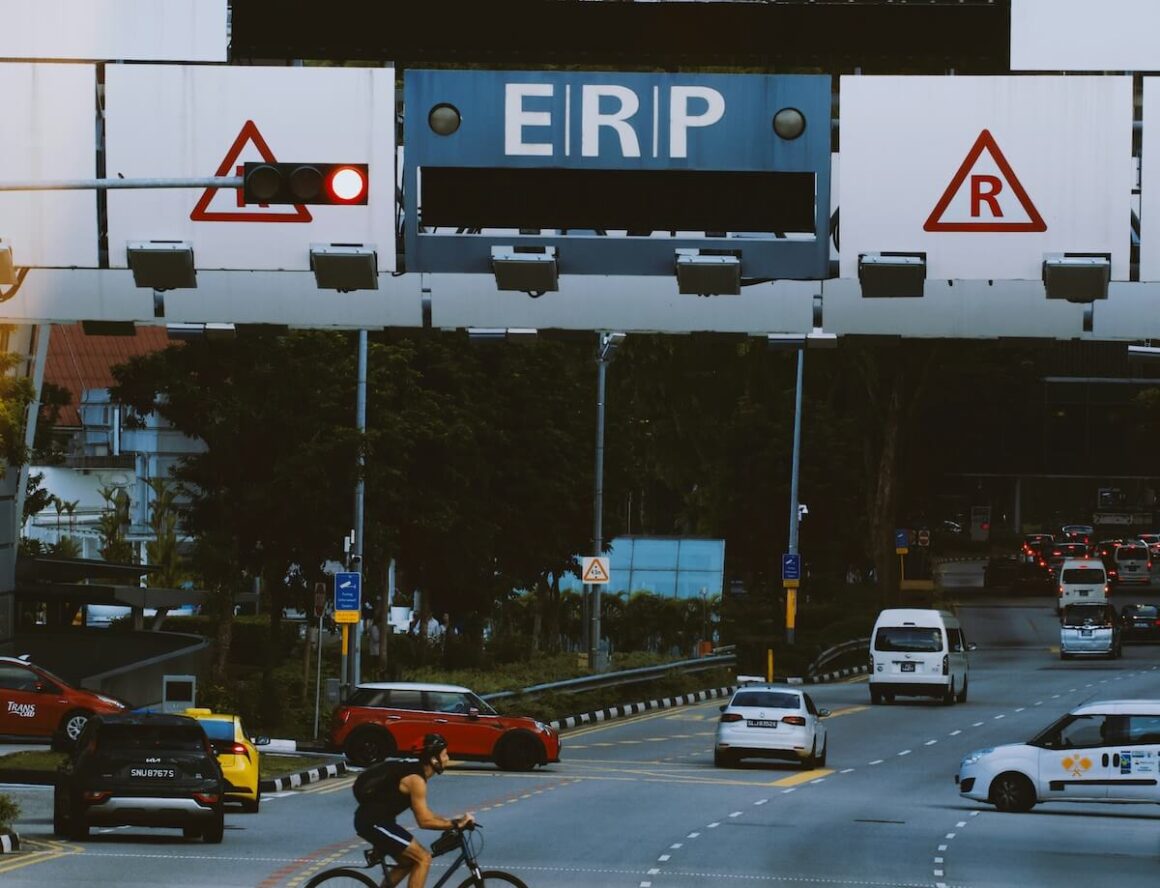
Electronic Road Pricing (ERP)
Singapore uses Electronic Road Pricing to charge vehicles for using certain expressways and roads during peak hours. Charges are deducted automatically via an in-vehicle unit or, for foreign vehicles, through alternative payment methods.
Foreign vehicles without a Singapore-registered in-vehicle unit must use a Temporary Day Licence (TDL) to traverse ERP gantries. Purchase a TDL from any Singapore Post outlet or AXS machine. The TDL covers a fixed charge regardless of how many gantries you pass in a day.
Many ERP gantries operate only during peak hours, so weekend or off-peak visits may not incur charges. Verify the LTA’s operating hours before your trip to identify which routes are affected during your visit.
Driving Rules to Know
- Speed limits are in kilometres per hour and enforced by speed cameras throughout the expressway network
- Left turns at red lights are prohibited unless a specific sign permits it
- Mobile phone use while driving carries heavy fines
- Seatbelts are compulsory for all passengers, including rear passengers
- Singapore drives on the left, same as Malaysia
Parking
Parking is metered almost everywhere outside private carparks. The HDB and URA system uses coupons or electronic payment. Download the Parking.sg app before arriving to activate and extend parking sessions using your phone number and credit card.
Carpark charges accumulate quickly, especially in the CBD. Include parking as a budgeted expense in your trip costs.
Timing Your Crossing: When to Go and When to Avoid
Queue times follow predictable patterns. The difference between a 30-minute crossing and a two-hour delay depends on when you travel.
Worst Times to Cross
- Friday afternoons and evenings (3pm to 9pm): Singaporeans heading to Johor for the weekend combine with Malaysians returning to Singapore
- Sunday evenings (5pm to 10pm): Malaysians returning to Singapore for work
- Eve of Malaysian and Singaporean public holidays: Simultaneous surges when countries share holidays like Chinese New Year and Hari Raya
- School holiday periods: Both countries’ school calendars generate volume increases
Best Times to Cross
- Weekday mornings between 10am and 12pm: After morning commuter traffic, before afternoon congestion
- Weekday afternoons between 2pm and 4pm: Generally the quietest window at both checkpoints
- Saturday mornings before 9am: Early Saturday departures typically encounter smooth traffic
The Second Link consistently shows shorter queues than the Causeway during most periods. If route flexibility is possible, defaulting to Tuas on peak travel days reduces wait times.
Practical Tips for the Drive
Cash and Touch ‘n Go: Your Touch ‘n Go card works on Malaysian tolls to the border. Once in Singapore, use Singapore dollars or a credit card for parking and incidentals.
Breakdown coverage: Check whether your Malaysian roadside assistance extends to Singapore. Many policies do not. If you break down on the Causeway, contact your provider to confirm coverage and obtain emergency support numbers beforehand.
Motorcycles use a separate lane: At the Causeway, motorcycles queue separately from cars and move at a different pace. Do not assume car delays mean motorcycle delays.
Checkpoint photography: Photographs and video at checkpoint areas are prohibited. Both Malaysian and Singapore immigration enforce this strictly.
Declaration at Singapore Customs: You will be asked to declare goods you are bringing in. Singapore’s duty-free allowances for alcohol and tobacco are specific and strictly enforced. Declare honestly and bring only what you need.
Frequently Asked Questions
Do I need an International Driving Permit to drive in Singapore as a Malaysian licence holder? No. Malaysian driving licence holders are permitted to drive in Singapore using their Malaysian licence without an IDP, provided it is valid and not expired.
How long does it take to cross from Johor to Singapore by car? On a quiet weekday, the full crossing including both checkpoints takes 30 to 45 minutes. During peak periods (Friday evenings, Sunday nights), the same crossing takes two to four hours or longer.
Can I take a rental car from Malaysia into Singapore? It depends on the rental company’s policy. Many Malaysian car rental companies prohibit taking vehicles into Singapore due to insurance and permit complications. Always check your rental agreement.
What happens if my VEP is not registered before I reach the checkpoint? Singapore Customs can turn your vehicle back. You cannot enter Singapore without a valid VEP, and there is no on-site processing facility at the border.
What fuel level should I maintain crossing into Singapore? The three-quarter tank rule applies to Singapore-registered vehicles leaving Singapore. For Malaysian cars entering Singapore, there is no formal requirement, but crossing with a full tank avoids scrutiny and delays.
Are there toll charges on the Malaysian side before the border? Yes. Depending on your route to Johor Bahru, you will encounter tolls on the North-South Expressway and other highways. These accept Touch ‘n Go and SmartTag. Factor these costs into your budget alongside Singapore-side expenses.
The drive from Malaysia to Singapore is manageable once your paperwork is complete, timing planned and crossing chosen. Crossing one of the world’s busiest land borders becomes routine with proper preparation.


