
Southeast Asia’s digital economy is booming, with millions of consumers shopping online every day. But for eCommerce brands, success in this region isn’t just about having great products. It’s about navigating a fragmented market, where cultures, languages, payment preferences, and logistics differ from one country to the next.
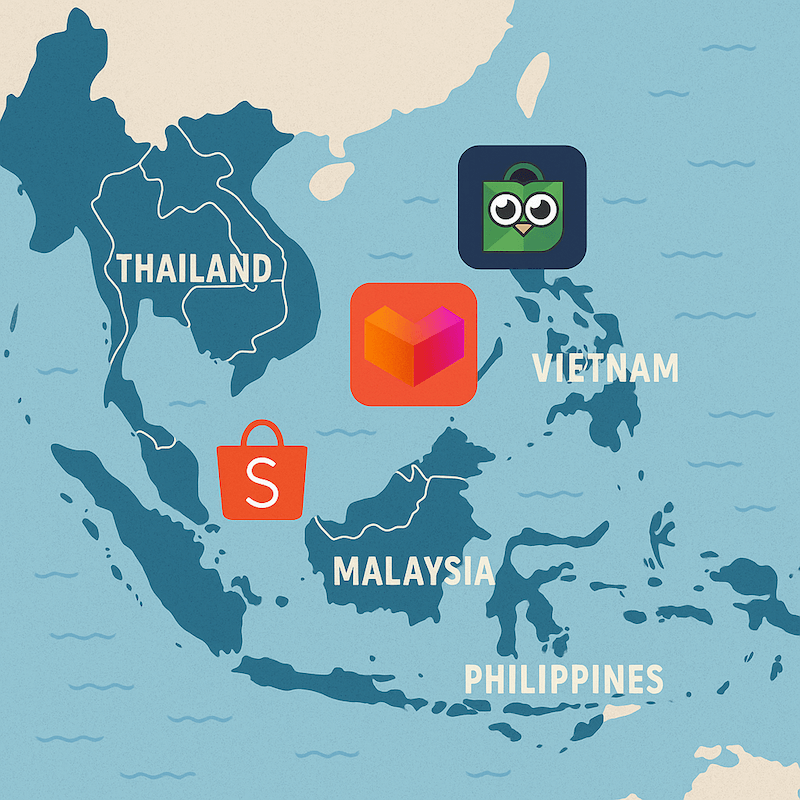
From managing inventory across multiple channels to adapting to local buying habits, expanding into Southeast Asia’s top marketplaces like Shopee, Lazada, and Tokopedia requires both agility and strategy.
So, what’s the best approach to marketplace expansion in SEA? Let’s break it down.
Southeast Asia is Full of Opportunity and Complexity
At first glance, Southeast Asia looks like one big eCommerce goldmine. But dig deeper, and you’ll notice that each country comes with its own unique set of challenges.
- Cultural and language diversity: A one-size-fits-all marketing strategy simply won’t work here. What performs well in Singapore may flop in Thailand or Vietnam.
- Payments and preferences: Many consumers still prefer COD or local e-wallets over credit cards. Ignoring this can cost you sales.
- Logistics and infrastructure: Cross-border shipping, customs duties, and last-mile delivery delays can quickly eat into your margins.
- Intense competition: Both regional startups and global giants are investing heavily in SEA. Standing out is harder than ever.
Despite these hurdles, we’ve seen brands scale rapidly when they get their marketplace strategy right. Some see up to 3x growth within the first quarter of expansion, and over 200% year-on-year revenue gains. But it doesn’t happen by chance.
When Should You Start Expanding to New Marketplaces?
Expansion isn’t something to rush into blindly. Timing and strategy matter.
1. Competitor movement
If your competitors are already making moves in your target markets, don’t wait too long. First-mover advantage is real, and hesitation might cost you market share.
2. Revenue and cash flow readiness
Expansion demands resources. Make sure your existing operations are financially stable before spreading your wings.
3. Operational scalability
Do you have the infrastructure to manage demand, fulfill orders, and maintain service quality across new geographies?
4. Market saturation
If your growth on existing channels has plateaued, it might be time to test new territories or reach new customer segments.
Brands that expand when the data supports it, not just because of FOMO, tend to see much better results.
Designing a Marketplace Expansion Strategy That Works in Southeast Asia
1. Define Your Expansion Type
Before jumping into new markets, get clear on why you’re expanding.
- New geography: Are you entering a new country with untapped potential?
- New audience: Has your current customer segment plateaued, and you’re looking to diversify?
- New product categories: Are you introducing new SKUs that cater to a different buyer group?
Some brands wait until they’ve saturated one region before going cross-border. Others ride the momentum of a merger or acquisition to break into a new market.
Whichever path you’re on, decisions should be backed by data. Look at your CAC (Customer Acquisition Cost), ROAS (Return on Ad Spend), fulfillment readiness, and customer lifetime value to map out what success should look like.
2. Localize Your Marketplace Strategy
Here’s the reality: no two marketplaces in SEA are alike.
Let’s take a look:
- Shopee is highly mobile-driven and performs well with gamified campaigns and time-limited deals. It’s ideal for rapid multi-country expansion, but you’ll need to localize your store and content to fit each market.
- Tokopedia leans heavily on flash sales and category-led discovery. Success here often means playing into their algorithm and promotional ecosystem.
- Lazada offers excellent regional coverage, but the setup can get complicated across Lazada Marketplace, LazMall, and their Cross-Border program. Logistics and warehousing support are strong, but you need to stay compliant with country-specific fulfillment rules.
Each marketplace also comes with cultural and language nuances. A product description that converts well in Bahasa Indonesia might not work in Vietnamese. A/B testing content by region is key to scaling effectively.
3. Understand the Cost Structures
Marketplace commissions can seriously impact your margins, especially if you’re also spending heavily on ads.
Here’s a quick snapshot of what to expect:
- Shopee
- Marketplace: No commissions for sellers with fewer than 100 orders
- Shopee Mall: Commissions range from 2% to 9%, depending on the product category and country
- Marketplace: No commissions for sellers with fewer than 100 orders
- Tokopedia
- No sales commission, but new sellers must place a security deposit (2% to 15%), which can be hefty for high-value items
- No sales commission, but new sellers must place a security deposit (2% to 15%), which can be hefty for high-value items
- Lazada
- Lazada Marketplace: 0% commission for local sellers
- LazMall: Starts at 5%
- LazGlobal: Variable commission based on destination country
- Lazada Marketplace: 0% commission for local sellers
Choosing where to expand isn’t just about audience size, it’s about profitability. Always factor in fulfillment costs, advertising spend, and marketplace fees when planning your expansion strategy.
4. Scale With the Right Multichannel Solution
The more marketplaces you sell on, the more complex operations become. Without the right tools, it’s easy to get overwhelmed.
Solutions like Graas Marketplace Store Management are purpose-built to simplify this. Brands using these tools can:
- Manage listings and campaigns across multiple marketplaces in real-time
- Sync inventory to prevent overselling or stockouts
- Centralize order fulfillment and warehouse coordination
- Unify reporting and insights from different regions
Having this level of visibility and control frees up your team to focus on strategic growth rather than firefighting daily ops.
Better still, you can work with experienced eCommerce partners who understand the nuances of SEA and can help you localize and optimize every part of your marketplace presence.
Final Thoughts
Expanding your eCommerce business into Southeast Asia’s marketplaces isn’t just a growth opportunity, it’s a necessity if you want to stay competitive in 2025 and beyond.
But it’s not plug-and-play. Success depends on understanding the region’s diversity, picking the right platforms, managing costs, and executing with local insight.
With the right strategy and the right tools, you’re not just selling in SEA, you’re building a resilient, scalable business across one of the world’s most exciting digital economies.


