
Most Malaysian homes have at least one air conditioner. That’s just reality when you’re living in a country where the temperature barely dips below 26°C year-round. But air purifiers are a different story. Many people still aren’t sure what they actually do, whether they overlap with what an aircond already provides, or if buying one is just money going toward a gadget that sits in the corner looking busy.
The short answer: these two appliances do completely different jobs. The longer answer depends on your home, your household, and what problem you’re actually trying to solve.
Key Takeaways
- An air conditioner controls temperature and humidity; it does not meaningfully clean the air you breathe.
- An air purifier removes airborne contaminants like dust, allergens, and fine particles, but cannot cool a room.
- Malaysia’s haze season and year-round humidity make a strong case for running both appliances together.
- Certain households, specifically those with young children, allergy sufferers, or pets, benefit most from adding an air purifier to their home.
- Several reputable brands sell air conditioners in Malaysia at different price points, with features ranging from basic inverter cooling to units with built-in air purification.
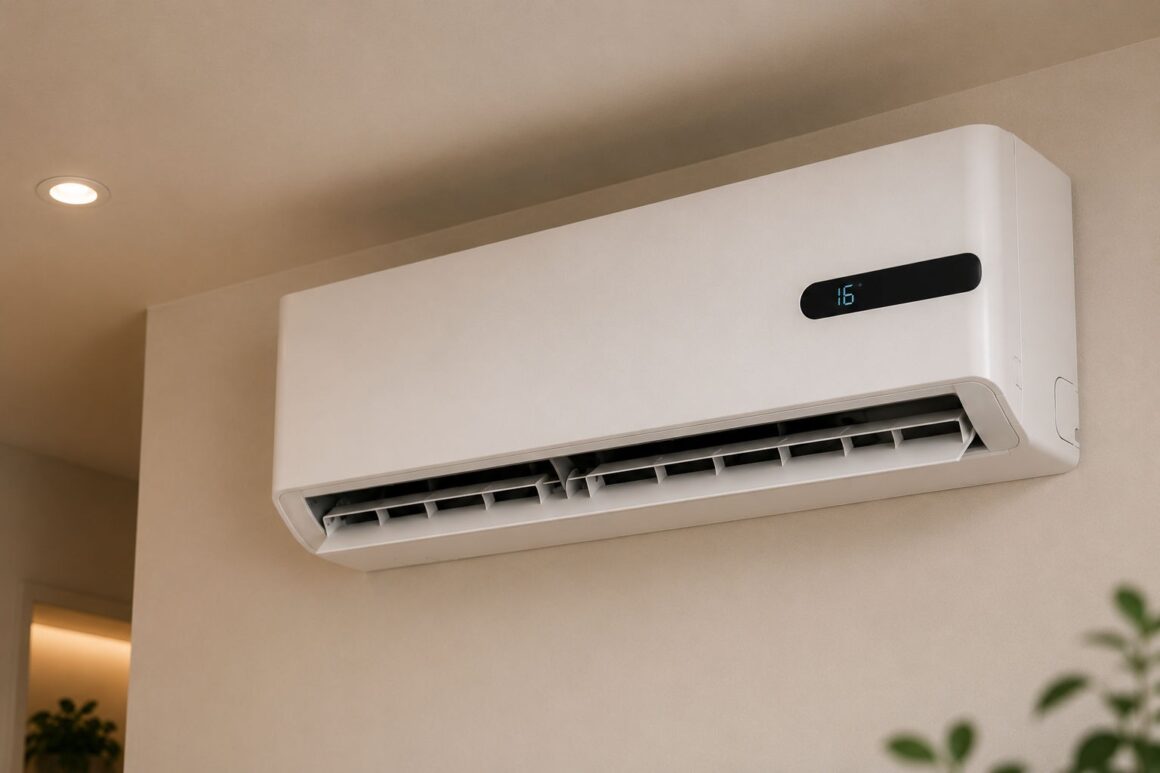
What Does an Air Conditioner Actually Do?
An air conditioner pulls warm air from inside your room, passes it over a set of cooling coils, removes moisture, and pushes cooled air back out. That’s the core of it. The result is a room that’s cooler, less humid, and more comfortable to be in, especially when the Malaysian sun is doing its thing at 2pm.
Most air conditioners also have a basic filter, usually a mesh screen, that catches larger dust particles before they hit the internal components. This filter exists to protect the machine, not to clean your air. It won’t stop fine particles, allergens, or anything in the PM2.5 range from circulating freely around your room. Swapping your aircond filter regularly helps the unit run better, but it won’t meaningfully improve your indoor air quality the way a dedicated purifier would.
Worth knowing: air conditioners recirculate the indoor air. They don’t bring in fresh air from outside. So if your indoor air has pollutants in it, the aircond is mostly just cooling that same air and pushing it around.
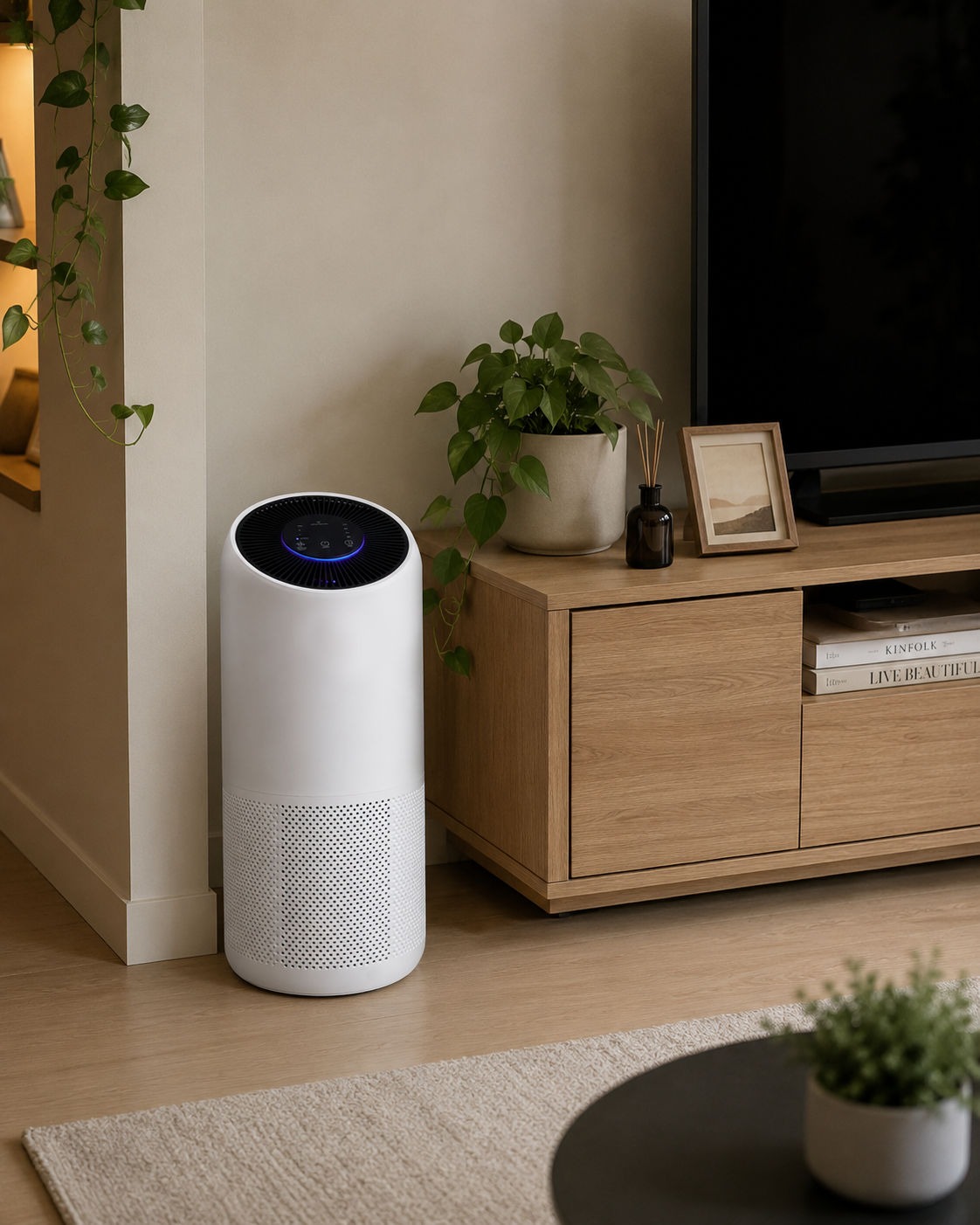
What Does an Air Purifier Actually Do?
An air purifier pulls air through one or more filters designed specifically to trap fine particles. The most common and well-regarded setup is a True HEPA filter, which captures particles as small as 0.3 microns, including dust mites, pollen, mold spores, pet dander, and certain bacteria. Many units also include an activated carbon filter to handle odors, cigarette smoke, and volatile organic compounds (VOCs).
Unlike an air conditioner, an air purifier has no effect on room temperature. It won’t cool you down. What it will do is change the air quality in your space on a continuous basis. Most units run quietly in the background around the clock, processing the room’s air multiple times per hour depending on the unit’s capacity and your room size.
Air purifiers are the right tool if your concern is what’s in the air rather than how warm the air is.
Air Purifier vs Air Conditioner: Key Differences at a Glance
| Feature | Air Conditioner | Air Purifier |
| Primary function | Cools and dehumidifies the room | Filters and cleans indoor air |
| Removes allergens & fine particles | No (basic filter only) | Yes (HEPA and carbon filters) |
| Controls room temperature | Yes | No |
| Reduces humidity | Yes | No |
| Removes odors and VOCs | No | Yes (with activated carbon filter) |
| Recommended for allergy sufferers | Not specifically | Yes |
| Energy consumption | Higher (compressor-driven) | Lower (fan-based) |
| Brings in fresh outdoor air | No (recirculates indoor air) | No (filters existing indoor air) |
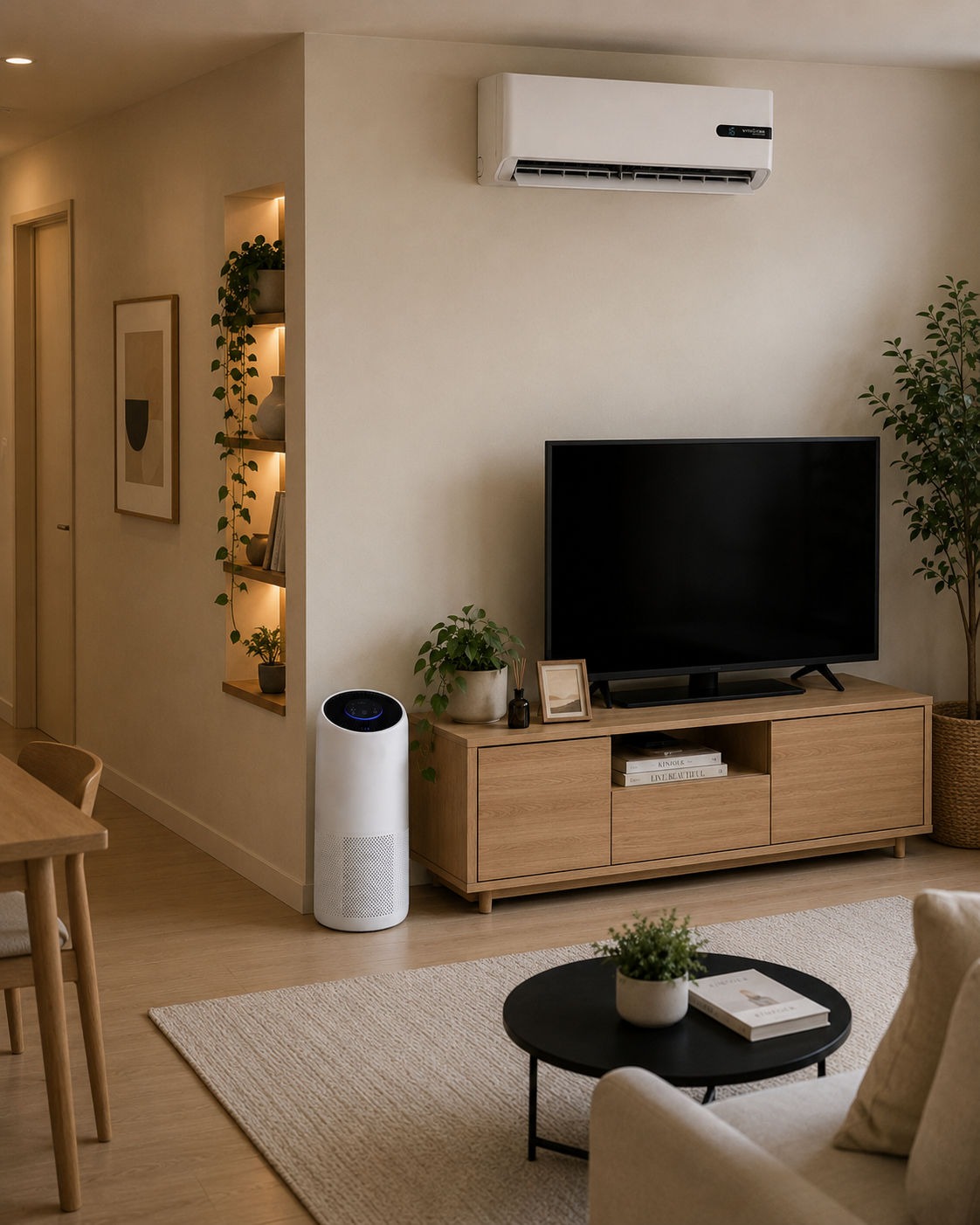
Why Malaysia’s Climate Means You Might Need Both Air Conditioner and Air Purifier
Here’s where it gets Malaysia-specific. Our climate creates two distinct problems that no single appliance solves on its own.
Humidity Level: The first is heat and humidity. This one is obvious, and it’s why virtually every home already has an air conditioner. Running the aircond keeps indoor humidity in a manageable range, which also reduces the conditions that encourage mold and dust mites to thrive.
Air Quality and Pollutant: The second problem is air quality, and this one gets less attention. Malaysia’s annual haze season, driven by transboundary smoke from land clearing across the region, pushes outdoor Air Pollutant Index (API) readings into unhealthy territory for weeks at a time. When that happens, people close their windows and doors. This keeps haze particles out, but it also traps indoor pollutants inside with no way to escape. Cooking fumes, cleaning product residues, pet dander, and whatever the aircond filter missed all continue to accumulate.
Haze Season: Running an air purifier alongside your air conditioner during haze season is one of the more practical things you can do for your family’s health. The aircond handles the temperature. The purifier handles what’s actually in the air.
Respiratory Health: Outside of haze season, the combination still makes sense in homes with young children, elderly family members, or anyone with respiratory sensitivities. Indoor air quality in a sealed, air-conditioned room tends to be worse than people expect.
Signs Your Malaysian Home Needs an Air Purifier Specifically
Not every household needs an air purifier urgently. But a few situations make the case pretty clearly.
Health Condition
If anyone in your home has asthma, rhinitis, or frequent allergy flare-ups, an air purifier is worth taking seriously. HEPA filtration reliably reduces airborne triggers like pollen and dust mite particles, which are among the most common culprits for indoor allergy symptoms.
Pet Dander
Pet owners are another clear use case. Animal dander is light, fine, and extremely good at staying airborne for extended periods. Standard aircond filters don’t catch it. A purifier with a HEPA filter will.
Stale and Musty Smell
If you notice a persistent musty or stale smell in your home, that’s often a sign of mold spores or accumulated organic particles in the air. An air purifier with activated carbon can help address the odor while HEPA filtration catches the particles behind it.
Poor Ventilation
And if you live in a unit near a busy road or in an older building with poor ventilation, indoor PM2.5 levels may be higher than you’d assume even on non-haze days. A purifier running continuously is cheap insurance for that.
Top Air Conditioner Brands in Malaysia Worth Considering
If you’re in the market for an air conditioner, the options in Malaysia are wide. Here’s a straightforward breakdown of the brands most commonly found in Malaysian homes and what each tends to do well.
CUCKOO
CUCKOO is a brand most Malaysians associate with water purifiers, but they also carry an air conditioning range as part of their broader home appliance lineup. Their VITA-S runs on inverter technology for energy efficiency and quiet operation. One practical point worth noting: CUCKOO also offers air purifiers, so households looking to run both appliances under one service and maintenance umbrella have that option. Their CUCKOO+ Care service covers multiple product categories, which can simplify after-sales for buyers who prefer dealing with a single provider.
Daikin
Daikin is consistently at the top of most lists for a reason. Their inverter technology is among the most energy-efficient available, and their units are built to last in tropical conditions. They’re on the pricier side, but over a 10 to 15-year lifespan, the electricity savings tend to justify the upfront cost. If you want something you can set and largely forget about, Daikin is a safe bet.
Panasonic
Panasonic occupies a good middle ground between performance and price. Their nanoe-X and nanoe-G models add a layer of air purification technology to the cooling function, which appeals to households where indoor air quality is a concern. They also have a strong local service network. Generally considered the best value for families who want clean air alongside reliable cooling.
Midea
Midea has grown significantly in the Malaysian market by offering solid inverter cooling at accessible price points. Their range covers both budget and mid-tier segments, and their units are straightforward to maintain. A good option if you want reliable cooling without stretching the budget.
Sharp
Sharp’s Plasmacluster Ion technology actively releases ions that neutralize airborne allergens and mold spores during operation. For households where indoor air quality is as much a priority as cooling performance, a Sharp unit is worth considering. Their prices are competitive and their designs tend to be understated.
Can You Use an Air Purifier and Air Conditioner Together?
Yes, and there’s no conflict between the two. They work on separate systems and different functions, so running them at the same time is perfectly fine.
A few practical points if you’re doing this. Placement matters for your purifier. Position it where air flows freely, away from walls and furniture that would block intake. Placing it in the part of the room where people spend the most time is generally more effective than sticking it in a corner.
Keep your aircond filter clean. A clogged filter reduces airflow and pushes the compressor harder, costing you more on electricity. This is separate from what your air purifier is doing. Both appliances need their own maintenance on separate schedules.
If you’re running both during haze season with windows closed, your purifier will work harder than usual. Check the filter condition more frequently during those periods. Most modern purifiers have an indicator that tells you when the filter needs replacing, so it’s not something you need to track manually.
Conclusion
Almost certainly, an air conditioner. In Malaysia, that’s a given. The real question for most households is whether to add an air purifier on top. If you’re in good health, live with adults, and don’t have pets or notable allergy sensitivities, your existing aircond setup is probably adequate for day-to-day comfort. Consider adding a purifier during haze season, either as a standalone unit or a portable one you move between rooms.
If you have young children, family members with respiratory conditions, or pets, the case for a dedicated air purifier is straightforward. The aircond will keep everyone cool; the purifier handles what the aircond can’t.
For households looking to cover both needs, most of the brands listed above offer air purifiers alongside their air conditioner ranges, so you’re not short of options. Panasonic, Sharp, and CUCKOO all have dual presence across both categories if you’d prefer to consolidate under one brand.
At the end of the day, these aren’t competing appliances. They address different problems. Running both is not redundant; in Malaysia’s climate, for many families, it’s the more complete solution.


